
2024-2025 Events
Previous Events
Our 2024-2025 school year was filled with some really great events! Check out below to see all the fun we had.
Social Events
First-Year Scavenger Hunt
During freshman orientation week, we led a
scavenger hunt for freshmen to connect with their 5-
person Biomedical Engineering & Design Lab group.
Given 21 tasks, BME students spent an hour taking
photos of various tasks with their lab group.
Amassing over 360 responses, the average completed
tasks per group was over 15. The first team to
complete all the tasks received a team dinner.
Students said that this activity helped them break the
ice when meeting their BME peers for the first time.
Attendance: 125

Fall Gelato Social
Our Fall Gelato Social is historically the earliest social event JHU
BMES has hosted in the semester. Drawing a crowd of over 250
attendees, students enjoyed free gelato and lawn games. For
many freshmen, it helped introduce them to upperclassmen and
talk to further solidify friendships at the beginning of the
semester in a casual setting. We will continue to build out and
expand this event in the years to come for a beginning-of-the-
year social event.

Football Watch Social
This year, we took a twist on our traditional Fall Social and turned it into a Ravens v. Bears Football Watch Party. Complete with donuts and apple cider, we held an open
door event in the BME Department building and many students in the Design Studio came down to enjoy a part of the football game.
Valentine's Candygrams
New this year, we had a Valentine’s candygram event for the BME
department, and we handed out a total of 100 candygrams priced
at $2 per candygram. We were able to raise around $130 dollars
by doing this and handed them out during core classes in each
grade. It was a fun experience for everyone due to the mystery of
anonymous notes, which got students talking to each other to
figure out who their admirers were.

Winter Social
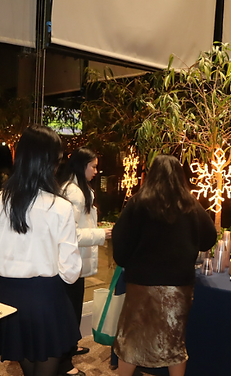
Winter Social is our chapter’s most popular event, gathering
more than 300 students and faculty in celebration of the
end of the fall semester each year. We had an even larger
turnout than in previous years, which was evidence of the
student body’s excitement at the trust and tradition that is
associated with this event. Students, faculty, and alumni
alike enjoyed a catered dinner from a local female business,
socialized with fellow BMEs, entered in a three-prize raffle,
and bought BME-specific merchandise from our fall
collection.
Jeopardy Night
BMES will be bringing back BMES Jeopardy Night. Teams of 4 will come together to compete for a $100 Ekiben gift card, JHU blue-jay keychains, and BME t-shirts! Similar
to last year, BMES board will curate three rounds of trivia style questions. Pizza and drinks will be served. We expect Design Team members, BMED groups, and other
subgroups of BME to come have fun!
Spring Gelato Social
BMES will be bringing back BMES Jeopardy Night. Teams of 4 will come together to compete for a $100 Ekiben gift card, JHU blue-jay keychains, and BME t-shirts! Similar
to last year, BMES board will curate three rounds of trivia style questions. Pizza and drinks will be served. We expect Design Team members, BMED groups, and other
subgroups of BME to come have fun!
Inter-Chapter Activities
Mid-Atlantic Research Day (MARD)
The main inter-chapter activity of our chapter is Mid-Atlantic Research Day (MARD), which we co-host with the student chapter of BMES at University of Maryland. We alternate hosting the event with UMD, and this year MARD is being held on JHU’s Homewood Campus. The entirely student-planned and student-run aspect of MARD sets it apart from other traditional research conferences and provides unique
opportunities to participants. For many undergraduate students, MARD may be the first time they have the opportunity to present a research poster in front of peers. Thus, MARD aims to foster an engaging and collaborative environment in which students can gain insights from their peers on places of improvement. This year we also used the BMES Annual Meeting to connect with other chapters. We attended the student chapter panel event and met many of the leaders of student
chapters who won last year’s CDR awards. We learned from them what set their chapters apart and discussed ideas for future events together. We also had lunch with the Colorado State University BMES team to further this conversation and hope to engage with further chapters in the future, perhaps co-hosting virtual events.

Outreach Activities
Health Care for Homless Drive
This past winter, BMES organized a holiday drive to support
Health Care for the Homeless, a Baltimore-based organization
that provides healthcare and support services to individuals
experiencing homelessness. We collected essential winter
items and snacks to help meet immediate needs during the
colder months. Thanks to our community’s generosity, we
were able to make a meaningful impact this past holiday
season.
Introductory Outreach Event
This semester, BMES Outreach volunteers taught core biomedical engineering concepts to over sixty 10th and 11th grade students in a research-focused course at Baltimore Polytechnic Institute. Students engaged with cutting-edge fields such as bioprinting, immunoengineering, and computational medicine. The first outreach session covered real-world applications—from estimating live vs. dead cell percentages under the microscope to exploring how machine learning is used in EEG analysis. Students were engaged throughout the
session, as they asked thoughtful questions, designed mini-experiments, and made connections between biomedical theory and real-life technologies.
Biomedical Data Science Workshop
Developed and taught students Python
programming and data analysis. Students were
assigned mini-projects, working with COVID-19
case datasets and producing figures based on
different health indicators and metrics.

Medical Device Exploration
Students worked in small groups, diving deeper
into the mechanisms of medical devices used in
the cardiac and neurology fields. The high school
students researched devices including left
ventricular assist devices (LVADs), continuous
glucose monitors, and tissue grafts. They were
asked to draw diagrams to demonstrate their
understanding and received feedback from our
BMES committee volunteers.

Mentoring Activities
The Johns Hopkins Biomedical Engineering program aims to foster connections between freshmen and upperclassmen, by providing first year students with a mentor who can guide them through their inaugural year of college. The mentoring program allows freshmen to have guidance when selecting classes, joining extracurriculars, and determining which areas of biomedical engineering are of interest to them. This past year, each incoming student filled out a survey regarding their academic and personal interests, as well as their goals for the future. Upperclassmen provided similar information, which was used in order to match them to the freshmen. Each mentor and mentee pair was assigned a group with whom they could attend larger mentoring events with, overall creating meaningful and memorable relationships. The mentoring program provides resources on studying, classes, finding research opportunities, joining engineering design teams, and other important tools to navigate life as a biomedical engineer at Johns Hopkins. New activities for the mentoring program included building connections with young alumni through establishing an accessible young alumni network. This was made more accessible to students via the newsletter and advertising of young alumni events during the larger university-sponsored alumni weekend.
October Mentoring Meetings
Mentors hold in-person check-ins with their assigned mentees at a time convenient to them. The October resources focus on the design team application process, picking a design team, and the application timeline for internships in industry. There are also specific planning resources such as a template 4-year plan. Spring Registration Information Session.This event was a panel for BME students who were unsure what courses to register for during the spring semester. The panel featured upperclassmen representatives across all the focus areas and gave students a chance to ask about specific classes they are interested in.
November/December Mentoring Meetings
Mentors hold in-person check-ins with their assigned mentees at a time convenient to them. The suggested talking points included summer opportunities (research, study abroad, internships, etc.), holiday events around Baltimore, reminders about Thanksgiving break, tips for finals, and advice for establishing a research position in the spring. End of Semester Goal Setting and Reflection Collaborating with the Life Design Lab (career center at Johns Hopkins), the mentoring program held a final reflection and goal setting event open to all mentors and mentees in the program. Starting from what went well during the semester and
moving to what could be done better in the spring. There was also food provided and time to socialize among the attendees.
February Mentoring Meeting
The spring semester begins the transition from mentoring current Freshmen to organizing resources for next semester and training the next round of mentors. All of the attendees had applied to become mentors. Everyone introduced themselves, we did a brief icebreaker, and outlined expectations for the mentors. To begin the planning for the next incoming class, we broke into small groups to discuss the best
part, worst part, and what people were excited about during each part of the fall semester (focusing on the first-year experience).
March Mentoring Meeting
Based on the responses from the February meeting, mentors were split into groups and assigned action items to edit and create resources to address what they had struggled with or enjoyed during the fall semester. These resources were added to
the resources from last year. During the March meeting, each group briefly presented the updates they had made. After the presentations, the floor opened for feedback and suggestions from the other groups. Feedback was also collected anonymously in a feedback form. After the meeting, this feedback was compiled and provided to each
group to make the relevant modifications.
Fall Registration Information Session
This event was a panel for BME students who were unsure what courses to register for during the spring semester. The panel featured upperclassmen representatives across all the focus areas and gave sophomores a chance to ask about specific classes they are interested in. Several faculty members also attended to give insights into the
curriculum changes for the first-year students.
Alumni Reception
This event was held in direct collaboration with the BME department and the Johns Hopkins Alumni Office. It was an opportunity for undergraduate BME students to network with BME alumni over food and showcase ongoing research and design projects.
Mentoring Wrap-up Meeting
This event was the final mentoring meeting discussing mentoring content and preparing mentors for next year. All the resources and talking points for each month were finalized. The official mentoring timeline and expectations were also created.
Industry and Professional Development Activities
This semester, the BMES Industry Committee organized a robust lineup of events aimed at helping students explore career pathways in biotechnology and industry. From site tours to speaker panels, each opportunity provided valuable insights into real-world biomedical engineering applications and career development strategies.
These events allow students to explore what they can do with their BME degree after graduation in a variety of different industries.
Design Team Application Workshop
To support first-year students navigating the application process for BME Design Teams, the Industry Committee hosted an information session featuring a detailed overview of the program, application tips, and a panel of upperclassmen leaders from various design teams. Panelists shared their personal experiences, challenges, and advice, followed by a Q&A session to address individual concerns.
Summer Opportunities Panel
To help students plan ahead for summer internships and research experiences, the industry and research committee co-hosted an information session and panel discussion. Topics included JHU-specific research programs such as PURA, as well as national REUs and industry roles. Upperclassmen panelists with REU, industry, and research backgrounds shared their experiences navigating applications, securing
funding, and balancing professional development with personal interests.
Cepheid Information and Recruitment Session
The industry committee brought forth this virtual session and introduced students to Cepheid, a leading company in molecular diagnostics. Representatives from the company highlighted internships and full-time opportunities, especially for students interested in project management and technical roles. The representatives provided experiences and introductions to a molecular diagnostics career pathway as well as
various rotational programs.
Thermo Fisher Scientific Industry Panel
The industry committee hosted a virtual panel discussion featuring professionals from Thermo Fisher Scientific. Speakers included backgrounds in product management, business strategies, and data science. Speakers shared their diverse career journeys and provided advice on navigating the biotechnology field, securing
internships, and the value of interdisciplinary skills in industry roles. The session concluded with open Q&A and networking opportunities.
Infinite Biomedical Technologies Site Tour
The industry committee took a limited number of students to visit Infinite Biomedical Technologies (IBT) in Baltimore to learn about cutting-edge technologies in myoelectric prosthetics. The tour included FlexCell and Glide systems, insights into the R&D and business operations, and networking with IBT professionals. This in-
person experience gave students a unique look at how academic training translates into impactful medical technologies. Attendance: capped at 10